

Endgame by Samuel Beckett

Endgame
by Samuel Beckett
Synopsis
The analysis of Samuel Beckett’s Endgame is included in the introductory book of Tarot Theatre The King Is Blind. In the new phase of this research, part of Beckett’s work is being used dramaturgically in the new version of Sophocles’ Oedipus Rex.
The audiovisual release is the outcome of the Endgame Sessions, presented exclusively on the online radio station Random Access Radio. The project began during the first quarantine period in Greece, in March 2020, and continued to evolve throughout its duration.
The starting point was Beckett’s Endgame, aiming toward a grotesque and “absurd” reading of the experience of isolation and the collective condition that emerged from the pandemic. This is not a theatrical performance, but an autonomous audiovisual interpretation, where to be faithful to Beckett’s stage directions was never the primary concern.
The field recordings of events and sounds of the exterior as taken from inside the house had the central role: bird sounds from the balcony at different hours of the day, thunderstorms and heavy rain, everyday incidents, even fragments of chanting from a neighborhood church. Sound functioned as the documentation of isolation.
During the process, another dimension gradually emerged: the relationship with the father and the question of space as a non-owned point of reference. Just as Hamm asks Clov to move him around the room so he can touch the walls — the only world he knows — here too, the question arises: what is your perspective on the world when the main point of reference due to the pandemic — the apartment itself — does not belong to you but to your father?
The final structure of the work was shaped by using the Tarot cards, transforming Endgame into an archetypal scheme. The aim was to connect the quarantine experience with a therapeutic ritual, where the connecting link is the subconscious — the uninterrupted flow emerging “from below” and manifested into everyday life.
From this perspective, ENDGAME concerns liberation from dead patterns and undead family bonds. It marks the moment of departure from mechanisms that restrict creativity and psychological growth. The archetype of the Fool signifies this rupture: the exit from the closed system.
Thus, Endgame functions as a necessary transitional stage, a vital step toward healing and reconnection with the World.
Soundtrack
Electronic composition: Rendeece
Mastering: Digging Sounds
Video
Book
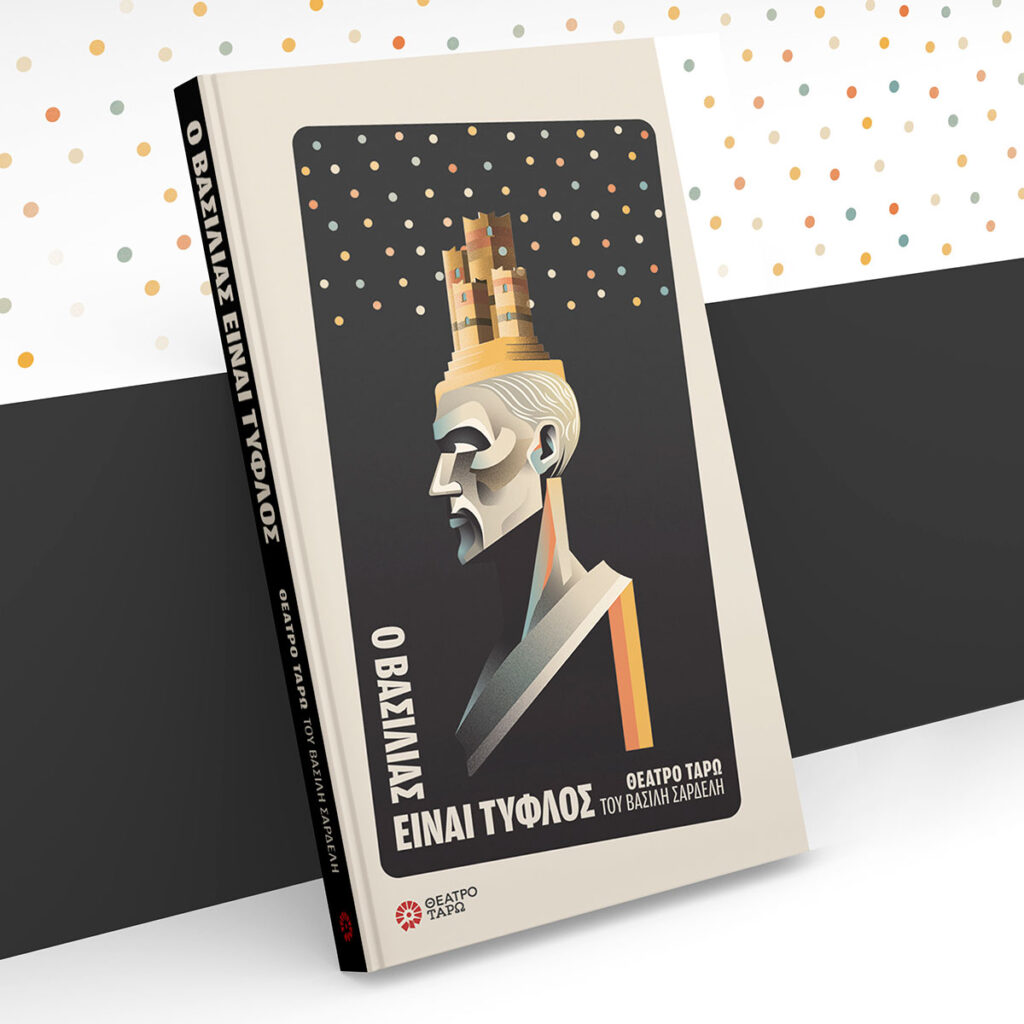
The King Is Blind is the first introductory book of Tarot Theatre (Theatro Taro) technique. It maps its theoretical and artistic roots: from the analysis of Carl Jung’s archetypes to the Psychomagic of Alejandro Jodorowsky.
The book develops dramaturgical readings of Endgame by Samuel Beckett in connection with the Tarot of Marseilles, as well as interpretations of Oedipus Rex by Sophocles through the Tarot deck of Salvador Dalí.
The Tarot cards do not function merely as illustration. Instead, they form a complete dramaturgical system. Tarot is transformed into a contemporary artistic language — a new alphabet for today’s creator.
Contributors to the publication
Text editing: Marivasia Kolliopoulou
Layout & Cover Design: Mr. Moschos @ WINK DESIGN
Artistic collaboration (artwork): Kostas Kosnetzov
The foreword was written by the founders of the theatre-group Fly Theater, Katerina Damvoglou and Robin Beer.